Showing posts with label Business. Show all posts

Saturday, January 14, 2017

Support for EU freedom of movement rules 'eroding'

One of the most senior Dutch government ministers has said a fundamental EU principle, freedom of movement, needs to be radically reformed.
Deputy prime minister Lodewijk Asscher said support was falling across Europe over the way it has been implemented.
Free movement, which allows any citizen of an EU country to work anywhere across the bloc, had led to wages being undercut and jobs lost, he said.
Mr Asscher argued the Brexit talks were a chance to look again at the policy.
Reform, he told the BBC, would mean "less immigration" across the EU if undercutting wages was banned.
The stark attack on the way freedom of movement operates could be helpful to Theresa May as Britain looks to gain privileged access to the single market at the same time as controlling EU immigration once the UK has left the EU.
Mr Asscher is the leader of the Dutch Labour Party, which is in a coalition government with the People's Party for Freedom, led by the Netherlands' prime minister, Mark Rutte - who is seen as an ally of the UK.
Although Mr Asscher made it clear that he supported the principle of free movement, he said the rule had been used as a "business model" for lowering wages.
"In essence [what] we have seen happening [is] that free movement has become synonymous with a race to the bottom, with undercutting of wages, with unfair competition in the labour market and that has to do with the rules Europe has produced itself," said Mr Asscher, who is also the Dutch employment minister.
"It is not the principle, it is the rule that has become such a big issue. It means that here in the Netherlands, like in other countries, on the scaffolding [site] you can see a Romanian or Portuguese painter doing the exact same work as a Dutch painter right next to him that is allowed to earn two, three, four hundred euros less than the Dutch worker.
 "That means, of course, that the Dutch painter is out of work, out of a job," Mr Asscher said.
"It means the smaller company that cannot afford to hire internationally is out of work.
"It means the support for the principle - which in essence is good - is eroding.
"It has to change if we want to preserve the principle, if we want to preserve the support for the European Union.
"The problem is that it has become a business model, a business model for lowering wages.
"I think there would be less migration if the principle of equal pay for equal work had been honoured."
Whether free movement of workers has actually led to lower wages and fewer jobs - a key part of the referendum debate in the UK - is controversial and has been disputed.
The Dutch government is preparing for elections in March where immigration is one of the key issues.
Geert Wilders' far-right Freedom Party is running on a tough anti-immigration ticket and has called for a referendum on whether the Nether
 It has been gaining support and could be the largest party after the election.
Mr Asscher's move on freedom of movement is seen by some as an effort to shore up support for the Labour Party.
The deputy prime minister said that although the Netherlands was a natural ally of the UK, the EU would negotiate as a bloc and that Britain could not "have its cake and eat it", cherry picking which parts of the EU rule book it wanted to abide by in return for special access to the economically important single market.
"I think what is important with what both Angela Merkel [the German Chancellor] and my Prime Minister have said [is] that you can't just say 'I want this to happen' and have everybody else say yes.
"You need to make sure the change is to the benefit to all members.
"Not just because you want something done, you only want the dessert and not the other things.
"It would however be a mistake, a serious political mistake, if we don't use the Brexit momentum to look at what is wrong with the current European Union. We need it to change.
"It would be my hope, because we are so close to the UK, that there is a good deal between the EU and the UK.
"We have always been allies, and we are very important trading partners.
"We should not go out there to punish the Brits, we want them to prosper with us.
"However, a negotiation is a negotiation."
read more...

Thursday, September 1, 2016

Joe Sutter, 'Father of the Boeing 747', dies

Joe Sutter, the man who led development of Boeing's 747 jumbo jet, has died aged 95.
Boeing's commercial aircraft boss Ray Conner said Sutter was "an inspiration" not just to Boeing but "to the entire aerospace industry".
The 747, which ushered in the long-haul travel era, first flew in 1969 before making its commercial debut in 1970.
It only lost its status as the biggest passenger aircraft in 2007 with the launch of the Airbus A380.
Sutter was in charge of the engineering team that developed the 747 in the mid-1960s.
He and his team became known as "the Incredibles" for producing the world's largest aeroplane in just 29 months.

Cautious beginnings

Ironically, Boeing did not initially expect to produce many passenger-carrying 747s.
In the 1960s, the future of commercial aviation was widely expected to be with supersonic airliners. The subsonic 747 was expected to become obsolete after a production run of about 400 craft.

Boeing thought it would largely be used as a freighter - which was why the pilots' cabin was placed on an upper deck - giving the aircraft its distinctive humped silhouette.
However, with the oil price rises of the 1970s, noisy and expensive supersonic flight was limited to just one commercial aircraft - Concorde.
The 747, on the other hand, has been continuously updated and improved throughout its life.
Production is likely to last until at least 2019, and so far the company has delivered more than 1,500 of the planes.

Engineering career

Joe Sutter was born in Seattle in March 1921, and took a summer job at Boeing in 1940 while studying for an aeronautical engineering degree.

His first job was working on Boeing's 1940s propeller-driven airliner, the Stratocruiser, and was then involved in most of the company's subsequent commercial aircraft.
After his retirement from Boeing after four decades in 1986, he continued working for the company as a consultant.
He also served on the Rogers Commission that investigated the 1986 Space Shuttle Challenger disaster.
read more...

Adopt Swedish-style shareholder committee on pay, says MP

UK companies should adopt a Swedish-style shareholder committee in an effort to curb excessive pay for bosses, an MP has said.
The five biggest shareholders in large publicly-traded companies would sit on the committee, said Chris Philp, MP for Croydon South.
It would make decisions on pay and hiring directors.
His plan follows a call from Prime Minister Theresa May for tighter controls on corporate excess.
"I'm concerned that large shareholders in big public companies are simply not sufficiently engaged in taking responsibility for their investments in the companies they are invested in," he told Radio 4's Today programme.
"Reckless corporate behaviour and out-of-control executive pay" were symptoms of shareholders not being in charge of companies they own, he added.

'Taking responsibility'

The top five shareholders, based on holdings of at least a year, would be part of the committee.
Shareholders could decline to be on the committee, but would be "named and shamed," said Mr Philp, who is also a member of parliament's Treasury committee.
Large shareholders such as pension managers and fund managers should be "more involved in taking responsibility" on pay and governance, said Mr Philp, who published his proposals in a report with the High Pay Centre.
In July, Mrs May said she wanted to tackle the "unhealthy and growing gap" between "bosses" and "workers".
"It is not anti-business to suggest that big business needs to change," she said.

Analysis: Dominic O'Connell, Today programme business presenter
At another time, Chris Philp's ideas for the reform of executive pay might have fallen on stony ground. But the Conservative MP has chosen his moment well; when she was campaigning to lead his party, Theresa May singled out chief executive remuneration in her one speech on policy.
The new Prime Minister is clearly in the market for a cunning plan to tackle fat cats, and Mr Philp's strategy - or parts of it - might fit the bill.
Mr Philp wants to force big institutional fund managers to take a greater interest in pay, and an active role in policing.
The top five shareholders of every large listed company would be asked to go on a governance committee, and named and shamed if they refused. No longer would fund managers be able to duck out of tough decisions on pay packets, or hide behind the convenient fiction of the "abstain" vote at shareholder meetings.
There are obvious problems with Mr Philp's scheme. Fund managers have in shown themselves ready and able to revolt on executive pay - witness the stunning defeat of BP's board over pay at its annual meeting last year.
The inconvenient truth is that most fund managers are happy with most pay schemes and are only minded to act in egregious cases. The shareholder committees might simply replicate this sleepy status quo.

As shareholders are being taken to task by government, they have a target of their own in their sights.
A group of investors, led by the Local Authority Pension Fund Forum (LAPFF), is at odds with the Financial Reporting Council (FRC), a regulator for corporate governance and accounting standards.
At the heart of the row is whether investors and the public can trust company accounts.

'True and fair'

The row started when the FRC criticised a legal opinion which the LAPFF got from George Bompas QC on a point of company law. The LAPFF also employed Cherie Blair, the wife of Tony Blair, to argue its case.
Mr Bompas said in his opinion that new international accounting standards risked clashing with existing UK law that says companies must provide a "true and fair view" of their financial position.
Some shareholder groups, including the LAPFF, feel this clash has contributed to a range of scandals, from Tesco's accounting black hole to the collapse of HBOS and RBS.
The FRC wanted to say it had the government's backing, but now emails obtained under a freedom of information request showed the government actually refused to back the FRC's position and ordered it to tone down a response to the legal opinion.

'Real profits'

The LAPFF has written an open letter to FTSE 350 chairmen to show that the government would not back the watchdog.
"It's about whether we can trust the accounts and about whether the accounts have real profits which can find their way to shareholders' pockets or whether the accounts are imaginary," said Tim Bush, director or research at Pirc, which advises LAPFF.
The Financial Reporting Council said in a statement: "The FRC discusses policy issues on a regular basis with central government, as this [Freedom of Information] response shows.
"Our position on this issue is clear: the Companies Act 2006 does not require the separate disclosure of a figure for distributable profits.
"Ultimately interpretation of the Act is a matter for the courts. The FRC stands by what it has previously said on this matter."
read more...

UK job market 'weak around Brexit vote'

Recruitment giant Hays has said the UK job market weakened "significantly" around the time of the EU referendum, but it is too early to judge the long-term impact of the vote.
The company also said it had seen "no evidence" of any impact of the vote in markets outside the UK.
Its comments came as it reported an 11% rise in pre-tax profits to £173m for the year to 30 June.
Its profits were driven by strong trading in Asia and the rest of Europe.
In the UK, Hays said net fees were flat, with trading "more challenging" towards the end of its financial year, which coincided with the run-up to the EU referendum.
Conditions were particularly challenging in local government and healthcare markets in the UK.
Hays also said conditions were tough in banking in the City of London, and there were weakening trends in the construction and property business towards the end of the financial year.
Hays chief executive Alistair Cox said: "Following the EU referendum, there is increased uncertainty in the UK market, but we have seen no evidence of any impact elsewhere.
"It is too early to tell what the longer term impact may be and as ever, we will monitor activity levels closely."
Kean Marden, an analyst at Jefferies, said: "In construction and property, London and larger corporates have been most impacted. To date, Hays has seen no evidence of contagion into Europe."
"We are mindful that July and August are seasonally quiet months for the industry and September (which can be one of the largest revenue contributors of the year) will provide more meaningful insight."
The UK comprises about a third of Hays' business. It employs about 9,200 people across 33 countries.
In the Asia Pacific region net fees grew by 4%, with Australia up 5%, boosted by strong public sector growth.
In continental Europe and the rest of the world, net fees increased by 15%.
read more...

Ex-Air China manager charged in US with smuggling for Chinese military

A former manager at Air China has been charged with smuggling packages in and out of the US for Chinese military officials based in New York.
Ying Lin transported the packages on flights from China in exchange for gifts like Apple devices and duty-free liquor, US prosecutors said.
The contents of the packages were not disclosed in the court filing.
She is also accused of helping a Chinese national that was under investigation escape the country.
Ms Lin was first arrested in August 2015 on a different charge. The new indictment has her charged with five criminal counts, including smuggling and obstruction of justice.
read more...

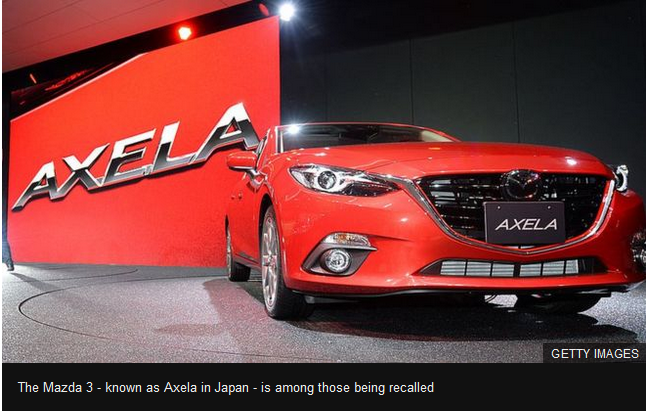
Mazda recalls 2.2 million cars over tailgate issue

Japanese carmaker Mazda has said it is recalling 2.2 million cars worldwide because of a defect in their tailgates.
The recall affects about 400,000 cars in Japan and 1.8 million sold on export markets.
The cause of the recall is paint having been wrongly applied to the tailgate, which could lead to corrosion. The issue has not led to any injuries or accidents.
Six models are affected, including the Mazda 3 and the CX-3 SUV.
The vehicles in question were produced between December 2007 and 2015.
In addition, the carmaker recalled another 110,000 cars sold domestically because of a computer issue with their diesel engines.
Mazda is Japan's fifth largest carmaker.
read more...

Pound jumps as UK manufacturing activity rebounds


The pound has jumped to a one-month high against the dollar after a survey indicated the UK's manufacturing sector rebounded sharply in August.
The Markit/CIPS purchasing managers' index (PMI) for the sector rose to 53.3 in August from July's figure of 48.3. A figure above 50 indicates expansion.
The weakening of the pound following the Brexit vote boosted exports, the survey found.
However, it also indicated that the weak pound had pushed up firms' costs.
A weakening of the pound makes UK goods cheaper for overseas buyers, but increases the cost of goods imported into the UK.
Since the Brexit vote, the pound has fallen in value by more than 10% against both the US dollar and the euro.
Following the release of the latest PMI survey, the pound jumped by 1%, more than a cent, against the dollar, hitting $1.3267.

'Marked recovery'

"The August PMI data indicate a solid rebound in the performance of the UK manufacturing sector from the steep downturn that followed the EU referendum," said Rob Dobson, senior economist at IHS Markit.
"The domestic market showed a marked recovery, especially for consumer products, while the recent depreciation of sterling drove higher inflows of new business from the US, Europe, Scandinavia, Middle East and Asia," he added.
Mr Dobson also said that inflation was "raising its ugly head".
"Rates of increase in input prices and output charges both hit five-year highs, which manufacturers placed squarely at the door of the cost impact of sterling on import prices," he said.

The latest PMI survey chimes with last week's CBI survey, which showed that export orders were rising at their fastest rate in two years.
At the time, the July PMI figure was taken as immediate evidence of an impending downturn, following June's referendum vote in favour of the UK leaving the EU.
It was one of the pieces of evidence that contributed to the Bank of England's recent decision to cut its interest rate to 0.25%.

'Robust data'

But Laith Khalaf, from the investment firm Hargreaves Lansdown, said the latest PMI figures now called the Bank's decision into question.
"It certainly seems that companies and consumers alike are carrying on with business as usual now the referendum is disappearing into the rear view mirror," he said.
"There's still a long way to go until Britain leaves the EU, and in the meantime, businesses still need to make money, so they can't just sit on their hands.
"However, the gathering pile of robust economic data might start to dissuade policymakers from any further monetary easing," he added.
Next week, another PMI survey, of the much larger services sector, will provide another snapshot of the state of the UK economy.
read more...

US airlines given go-ahead for Havana flights


The US government has given approval to eight airlines for flights to the Cuban capital Havana.
The announcement comes on the same day as the first commercial flight between the two countries in 55 years.
Under President Obama, the US has begun normalising relationships with Cuba.
The list of US airlines now granted permission to fly to Havana includes: American Airlines, Jet Blue, Delta, Southwest, United, Alaska Air, Spirit, and Frontier Airlines.
Most airlines plan to launch flights later this year or at the beginning of 2017.
Until now only chartered flights flew from the US to the Communist country. Most Americans travelled to the island, which is just 90 miles (144km) from the tip of Florida, via a third country.

Easing relations

Relations between the US and Cuba had been frozen since the 1960s when the US placed an embargo on the communist nation.
In 2014 President Obama announced he would take steps to normalise the relationship, and in August 2015 the US reopened its embassy in Havana after more than five decades.
The president is unable to lift the trade embargo and under US law Americans are still not permitted to travel to Cuba for tourism.
Travel even on commercial flights must fit into twelve pre-approved categories that include family visit, education and journalism.
A Jet Blue flight from Miami landed in Santa Clara, Cuba on Wednesday morning, marking the changing relationship.
read more...

Australia sues Volkswagen unit over alleged emissions fraud

Australia is suing the local arm of Volkswagen for allegedly misleading customers by selling modified vehicles that covered up emissions fraud.
Its consumer watchdog claims Volkswagen intentionally sold more than 57,000 such vehicles over a five-year period.
The Australian Competition and Consumer Commission (ACCC) is seeking a public declaration of misconduct, financial penalties and corrective advertising.
Volkswagen Australia said it is reviewing the ACCC claims.
In a statement, the firm said it does not think that the court action "provides any practical benefit to consumers because software solutions for cars affected by the voluntary recall are expected soon".
"The best outcome for customers whose vehicle is affected is to have the voluntary recall service updates installed," Volkswagen Group Australia managing director Michael Bartsch said.

Global backlash

The ACCC lawsuit covers 10 Volkwagen car models including the top-selling Golf, Passat and Polo,
"These allegations involve extraordinary conduct of a serious and deliberate nature by a global corporation," ACCC chairman Rod Sims said in a statement.
"We expect higher standards of behaviour from all companies that supply to Australian consumers."
Volkswagen, the world's second-biggest car maker, is also facing several private class action lawsuits in Australia.
The carmaker has suffered a global backlash since revealing last year that around 11 million of its vehicles had software or so-called "defeat devices" designed to bypass official emissions tests.
It has since had to pay billions of dollars in fines and settlements with both regulators and customers around the world.
Last month Volkswagen told a court it plans to compensate American car dealers affected by the scandal.
read more...

Apple chief Tim Cook says tax ruling 'maddening'

Apple chief executive Tim Cook says the European Commission ruling that Apple should pay billions of euros in back taxes to the Republic of Ireland is "maddening" and "political".
He told Irish broadcaster RTE that Apple had not been given preferential tax breaks in Ireland.
The EU ruling said Apple had been given €13bn of "illegal" tax benefits.
Mr Cook said he was "very confident" the ruling would be overturned on appeal.

'Outrage'

On Tuesday, the European Commission said Ireland had granted undue tax benefits of up to €13bn (£11bn) to Apple.
Speaking about the ruling, Mr Cook told RTE: "It's maddening, it's disappointing, it's clear that this comes from a political place, it has no basis in fact or in law, and unfortunately it's one of those things we have to work through."
"When you're accused of doing something that is so foreign to your values, it brings out an outrage in you, and that's how we feel. Apple has always been about doing the right thing.
"We haven't done anything wrong, and the Irish government hasn't done anything wrong."
Mr Cook disputed the Commission's finding that Apple had effectively paid a corporate tax rate of just 0.005%, or €50 out of every €1m, from one of its Ireland-based subsidiaries in 2014.
"It's a false number. I have no idea where the number came from. It is not true. Here is the truth. In that year, we paid $400m to Ireland, and that amount of money was based on the statutory Irish income tax rate of 12.5%."
Apple says that it was the largest corporate taxpayer in Ireland in 2014.
He said Apple paid income tax on products sold in different European countries to those countries, and an additional income taxes on profits in the US at a rate of 35%.
In addition, Apple has provisioned "several billion dollars" from its profits in 2014 to be repatriated to the US, he said.
"Right now I would forecast that repatriation to occur next year. It's not true that we paid just $400m or even just $800m [to Ireland and the US combined] - the number is materially larger."
"In 2014 our worldwide income tax rate was 26.1%," Mr Cook added.

Analysis: BBC Business editor Simon Jack
It was a skilful and very nuanced performance [by Mr Cook on RTE], but one which obscured a few key truths.
He claimed that Apple paid tax at a rate of 26% around the world, that isn't the whole story.
Apple works out its tax rate as if it had paid taxes due in the US at a rate of 35%.
But the actual payment of those taxes is deferred - till when, nobody knows.
Maybe until US taxes come down or some special tax amnesty is agreed to repatriate hundreds of billions that Apple and others keep off US shores in the tax equivalent of outer space.
In fact, the scramble to avoid paying tax at 35% is the reason the whole structure exists in the first place.

Apple's chief executive, Tim Cook, has dismissed the ruling by the European Commission as politically motivated.
He then went on to show he's no slouch as a politician himself.
In comments in Irish media, Mr Cook circled his own wagons in what is undoubtedly a political as well as a financial tussle.
First there was the personal touch. He spoke of the outrage he personally felt at being charged with conduct so "contrary to our values".
Then he tried to shore up the support of the Irish government by talking about 37 years of achieving great things together through some thick and thin times.
He described a time in 1998 when Apple almost closed its Cork facility before he realised how great its Irish employees were.
Just in case anyone missed the fact they were on the same side he repeated, "Apple hasn't done anything wrong and the Irish government hasn't done anything wrong".

Lastly, there was a bone thrown to the US government with a promise to repatriate "several billion dollars" to the US next year - lest we forget that in the minds of US politicians, if anyone is owed back taxes, it sure as hell ain't Ireland.
He knows that back home in the US, his bafflement at European officials exacting retrospective taxes on American companies will be shared.

No 'sweetheart' deal

It was a skilful and very nuanced performance, but one which obscured a few key truths.
He claimed that Apple paid tax at a rate of 26% around the world, that isn't the whole story.
Apple works out its tax rate as if it had paid taxes due in the US at a rate of 35%.
But the actual payment of those taxes is deferred - till when, nobody knows.
Maybe until US taxes come down or some special tax amnesty is agreed to repatriate hundreds of billions that Apple and others keep off US shores in the tax equivalent of outer space.
In fact, the scramble to avoid paying tax at 35% is the reason the whole structure exists in the first place.
Tim Cook flatly denied that Apple had any kind of sweetheart deal - anyone else could have parked money in Ireland untaxed for years if they had just asked he said.
That is a bit like saying any pub team could win the FA Cup - in theory they can, but without the Pogbas and Ibrahimovices of the tax lawyer world, they can't.
The European Competition Commissioner, Margrethe Vestager, has enormous powers thanks to her personal role in determining what constitutes illegal state aid.
She has used them to the full with this bold move against one of the world's most powerful companies. She has also picked a very wily political opponent.
                        

'Illegal deal'

On Tuesday, the European Commission ruled that Apple's Irish tax benefits were illegal.
After a three-year investigation, the Commission said Ireland had enabled Apple to pay substantially less than other businesses, in effect paying a corporate tax rate of no more than 1%.
Apple said on Tuesday that the decision would be harmful for jobs.
"The European Commission has launched an effort to rewrite Apple's history in Europe, ignore Ireland's tax laws and upend the international tax system in the process," the company said.
The Irish cabinet met on Wednesday to discuss the tax ruling. But it failed to agree a position, and will meet again on Friday to decide whether to appeal against the Commission's decision.
read more...

Wednesday, August 31, 2016

SES company first to use 'second-hand' SpaceX rocket

Luxembourg-based SES says it is going to be the first commercial satellite operator to launch a spacecraft on a "second-hand" rocket.
The company is booked to fly its SES-10 platform on a SpaceX Falcon 9 rocket that was previously used to send cargo to the space station in April.
The booster, after completing its ascent, returned to a touchdown on a drone ship in the Atlantic.
It has since been serviced and declared fit to fly again.
The launch of the Falcon, with its SES-10 payload, is likely to take place towards the end of this year.
It will be a historic moment in commercial rocketry. The traditional booster is expendable; all parts of it are discarded in the climb to orbit.
But now that California-based SpaceX has developed a means to recover flown stages intact, the rocket business looks set to enter a new era.
"We think it's a big moment," Martin Halliwell, the chief technology officer at SES, told BBC News.
"This is the way things are going to go for the industry in general. It's going to manage the price point of the launchers, I hope.
"It will also give us more vehicles. At the moment, after a spacecraft is built and ready, we have a wait of about seven months to launch it."
Mr Halliwell said SpaceX was offering SES a discount on the normal price of a Falcon 9, but that insurers had made "no material change" to the premium being asked to cover the mission.
"Both we and SpaceX have given very detailed answers to all the insurers' questions, and they've come away with the feeling that we've done our due diligence, that we're working closely together and that we're ready to go," he said.
The booster to be used is the first stage of the Falcon 9 that sent more than 1.5 tonnes of supplies to the International Space Station on 8 April.
It lifted off from Cape Canaveral Air Force Station, Florida, at 20:43 GMT and touched down nearly 10 minutes later on a barge stationed roughly 300km to the north east, in the Atlantic Ocean.
This drone ship, appropriately named Of Course I Still Love You, then brought the rocket stage into port, from where it was sent to the SpaceX testing facility in McGregor, Texas.
The booster was put on a stand and its nine engines fired again to prove their flight worthiness.
SpaceX has so far recovered six boosters. The very first, which made its successful return to Earth following a mission in December 2015, now stands outside the company's HQ in Hawthorne, California.
"Re-launching a rocket that has already delivered spacecraft to orbit is an important milestone on the path to complete and rapid reusability," Gwynne Shotwell, the president and chief operating officer of SpaceX, said in a statement.
"SES has been a strong supporter of SpaceX's approach to reusability over the years and we're delighted that the first launch of a flight-proven rocket will carry SES-10."
Reusability has long been rocketry's holy grail.
The space shuttle was famously designed as a partially reusable system, and yet the complexities of servicing the vehicle swamped any savings. The shuttle main engine, for example, although an engineering marvel, contained 50,000 parts.
SpaceX has tried to develop a far more practical model of fly-again rockets.
It says the Falcon's Merlin engines should be able to complete 40 firing cycles or more without significant parts exchange.
SES-10 has been built in the UK and France by Airbus Defence and Space.
Once in orbit, it will provide telecommunications services to Mexico, Central America, South America and the Caribbean.
read more...

US consumers expect economy will keep improving

US consumer confidence reached its highest point in nearly a year in August as economic conditions continue to improve.
The level indicates that Americans expect the economy to remain strong through the second half of the year.
According to the Conference Board, which tracks consumer sentiment, the index reading for August was 101.1, up from 96.7 in July.
The index has not reached such a high point since September 2015.
"Consumers' assessment of both current business and labour market conditions was considerably more favourable than last month," Lynn Franco, the Conference Board's head of economic indicators.
"Short-term expectations regarding business and employment conditions, as well as personal income prospects, also improved, suggesting the possibility of a moderate pick-up in growth in the coming months."
Increases in consumer confidence typically indicate more people are willing to spend money. As more than two-thirds of the US economy is generated by consumer spending, the increase signals likely economic growth.

Labour market strength

The percentage of Americans who expect business conditions to continue to improve over the in the next six months rose from 15.7% to 17.3%, while the number who expected worsening conditions fell from 12.4% to 11.1%.
The figure beat expectations by analysts, who predicted consumer confidence would stand at 97 on the index.
Earlier on Tuesday, the Federal Reserve's vice-chairman, Stanley Fischer, said in an interview with Bloomberg News that the US labour market was close to full strength.
Mr Fischer did not say whether the improvements in the labour market meant the Fed would increase interest rates at its upcoming meeting in September.
read more...

TTIP in further doubt as Hollande questions timing

The TTIP trade deal was dealt another blow on Tuesday as the French president cast doubt on when an agreement would be reached.
Francois Hollande said it would not be finalised before Barack Obama left office later this year.
Meanwhile, Germany's economy minister, Sigmar Gabriel, said it had no chance of being agreed before the US presidential election in November.
The Americans were unwilling to compromise with Europe, he said.
Mr Gabriel, who said over the weekend that the talks had in effect failed, also questioned whether the deal had any chance after the election.
"But if the Americans don't move towards the Europeans, then Europe can't agree to a 'TTIP light'. And with this, the project - at least how it was all planned for this year - has failed," he said.
EU trade commissioner Cecilia Malmstroem said on Tuesday that talks had not broken down and the aim was still to strike a deal before President Obama left office.
"I do not agree that TTIP negotiations have failed," she said. "They have been difficult, of course, we knew from the beginning, but they have not failed."
US trade representative Michael Froman told German magazine Der Spiegel that talks on TTIP were progressing.
The US and the European Union have been negotiating the Transatlantic Trade and Investment Partnership, also known as TTIP, for three years. Both sides had aimed to agree a deal this year.
TTIP aims to reduce or remove a wide range of barriers to transatlantic trade and investment, but has proved controversial in both Europe and America.
Its supporters say the deal could deliver bring economic gains of more than $100bn to both sides of the Atlantic, but critics argue it would give too much power to multinationals at the expense of consumers and workers.

'Bogged down'

President Hollande said in a speech to French diplomats that France wanted to "see things as they are".
"These discussions cannot result in an agreement by the end of the year. The negotiations have bogged down, the positions have not been respected, the imbalance is obvious," he added.
The French leader's comments followed a call by trade minister Matthias Fekl to end negotiations, which he said no longer had political support in France because US negotiators "give nothing or just crumbs".
He wanted a "clear, clean, definitive stop" to the talks, which could resume if wider EU-US trade relations improved.
Mr Fekl said France would ask the European Commission to suspend the talks when trade ministers meet in Slovakia next month.

Italy's trade minister said that a TTIP deal would be reached, but the talks would take longer than expected.
Carlo Calenda said that "TTIP will be sealed - it is inevitable", adding that it was essential for Italian exporters.
The minister admitted it would be difficult to reach a deal before Mr Obama left office, but added: "We have to carry on. This accord is essential for Italy."
read more...

Kickstarter crowdfunding site launches in Asia

Kickstarter, one of the world's leading crowdfunding websites, has launched in both Hong Kong and Singapore, its first sites in Asia.
The crowdfunding concept allows people to present innovations or business ideas online to ask for funding.
Until now, Kickstarter has operated in North America, Australia and Europe.
As a result, entrepreneurs in Singapore or Hong Kong had to co-operate with overseas partners if they wanted their ideas on the website.
With Kickstarter now launching in Hong Kong and Singapore, people can present their projects from a local base and with their fundraising goals set in Hong Kong or Singapore dollars.
Kickstarter will have to compete with local crowdfunding platforms such as Singapore's MoolahSense and OurCrowd or Hong Kong's FringeBacker.
Crowdfunding sites offer a platform to present a project or business idea and ask for financial support.
In order to win financial pledges, the projects needs to spell out the exact financial goal and by when it aims to reach it.
Kickstarter makes money by taking a cut from the amount the projects receive.
Prominent examples of products started on Kickstarter include the Oculus Rift headset, which received its first funding via Kickstarter in 2012, and the Pebble smartwatch.
However, the site has also witnessed high profile failures such as the Zano mini drone, which raised £2.3m ($3m) but then failed to launch a successful product.
read more...

Google to expand ride-sharing service in San Francisco

Google plans to expand a ride-sharing service in San Francisco using its Waze app, setting up a potential showdown with market leaders Uber and Lyft.
Waze gives traffic conditions and driving directions in real time.
Since May Google has been running a pilot carpooling service, which uses Waze to connect drivers and passengers near its California headquarters.
But by the end of the year anyone in the Bay Area will be able to request a ride, using the Waze app.
If successful, Google may look to expand the service to other cities.
The move may undercut its rivals, as Waze charges cheaper rates.
Under the pilot program, Waze charged riders a maximum of 54 cents a mile with no booking fee.
Same, same but different?
Waze aims to connect drivers and potential passengers heading in the same direction and the charges to passengers cover the cost of fuel and maintenance.
It is a different model from Uber and Lyft, where drivers use their own cars to offer rides for profit.
Over the last few years Google and Uber have started to compete in the fast-growing transport business.
Both firms are developing driverless cars, with Uber set to launch road tests in Pittsburgh soon.
Uber has also begun developing its own mapping software.
Both Uber and Lyft are estimated to be worth billions of dollars but have yet to turn a profit.
read more...

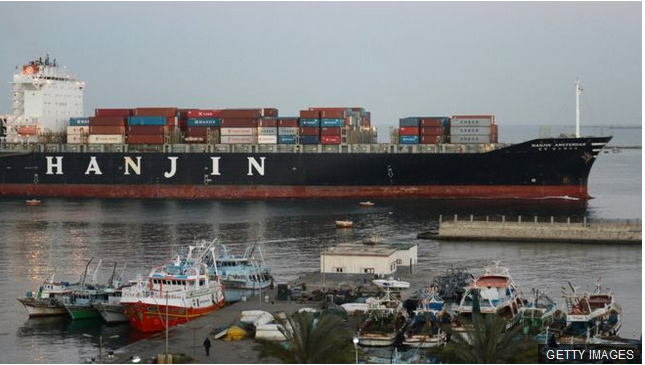
South Korean shipping giant Hanjin to enter receivership


South Korea's biggest shipping group Hanjin is set to enter receivership after its creditors refused to provide further funding to the indebted firm.
Hanjin's board unanimously agreed to make the court filing at a meeting on Wednesday, a company spokesman said.
It faces a cash shortage after failing to persuade key lenders to reschedule debt under a new restructuring plan.
Shares of Hanjin remain suspended in Seoul after plunging by as much as 29% on Tuesday.
Hanjin, which is also the world's seventh-largest container line, has been unprofitable for four of the last five years.

Potential buyer?

Hanjin may get some financial relief courtesy of rival Hyundai Merchant Marine (HMM).
Shares of HMM jumped by as much as 22% after Korea's financial regulator said the firm may buy some of Hanjin's assets.
However HMM hasn't been spared from the woes bedevilling the sector. It recently announced a reorganisation plan too.
South Korea's shipping and shipbuilding industry is one of the hardest-hit by a prolonged downturn in global trade.

Troubled waters
A drop in orders has led to overcapacity and depressed freight rates, as well as an increase in debts.
"Korean shipping companies have suffered large losses largely because charter rates on leased vessels were fixed in 2010 at a high level while actual shipping rates have fallen," Nomura analyst Young Sun Kwon said.
The South Korean government is now looking to undertake a painful reorganisation of the entire industry, which will require major retrenchments.
The ongoing restructuring is one of several reasons why we expect growth to be weak this year and next, Krystal Tan from Capital Economics said.
"The loss of tens of thousands of jobs certainly won't help economic sentiment," she added.
"But it is a relatively small number when set against the 26m people in employment in Korea so we're not likely to see a big spike in the unemployment rate."
read more...

Chinese beer giant Tsingtao hit by slowing economy

Tsingtao Brewery, China's second-biggest beer maker, has reported a sharp fall in profits.
In the six months to June, net income fell by 11% from a year earlier to 1.07bn yuan (£123m; $160m), its weakest first-half profit since 2012.
An economic slowdown has hit consumer spending in China and beers sales were also dampened by unfavourable weather including severe flooding.
Tsingtao also faced rising competition from foreign beer brands.
China is an attractive market for overseas firms as the nation drinks a quarter of the world's beer output.
But brewers have struggled to make profits in China.
The situation has not been helped by the sluggish Chinese economy, which has caused consumers to rein back on their spending.
Growth in retails sales fell in July to 10.2% from a 10.6% increase in June.
read more...

Irish cabinet to consider appealing Apple tax ruling

The Republic of Ireland's Cabinet will meet later to discuss the European Commission's decision that Ireland granted undue tax benefits of up to €13bn (£11bn) to Apple.
Finance Minister Michael Noonan has said the Irish Government will appeal the ruling.
The Irish Government has said it "disagrees profoundly with the commission's analysis".
"Ireland did not give favourable tax treatment to Apple," it added.
"Ireland does not do deals with taxpayers. No fine or penalty has been levied against the Irish State.
"This decision has no effect on the 12.5% rate of corporation tax and is not about Ireland's wider corporation tax regime."

Office 'existed on paper'?

The European Commission said Ireland's tax rulings had allowed Apple to pay substantially less tax than other businesses.
The Irish system had allowed profits to be attributed to a head office that "only existed on paper", said Margrethe Vestager, the European Commissioner for Competition.

Analysis: BBC Ireland Correspondent Shane Harrison

It all comes down to Ireland's reputation.
The Irish government has been criticised, particularly in the US, for almost being a tax haven similar to the Cayman Islands, something it strongly denies.
But €13bn is a huge amount of money: It would go a long way towards solving the housing crisis in the Republic for example.
Fine Gael, Fianna Fáil and Labour are more or less of the view that the government should appeal the ruling.
But Sinn Féin are calling for an independent assessment of whether or not Apple did get unfair treatment, whether it was human error or whether the system colluded to create this situation as the European Commission seems to believe.
It believes the government should not appeal and should spend the money.
The left-wing parties also believe the money should be spend in citizens' interests.
For them, it is a moral issue as to whether or not Apple are being getting unfair treatment given the amount of money ordinary people pay in their taxes.

Thirteen billion euros is approximately equivalent to a quarter of what the Irish government spends per year, and what it spends on health in total.
The Republic's government is a minority one, with Fine Gael being propped up by independents.
It is not clear whether the Independent Alliance cabinet members will vote to appeal the decision.
Apple itself is appealing against the decision, saying: "The European Commission has launched an effort to rewrite Apple's history in Europe, ignore Ireland's tax laws and upend the international tax system in the process.

"The commission's case is not about how much Apple pays in taxes, it's about which government collects the money. It will have a profound and harmful effect on investment and job creation in Europe.
"Apple follows the law and pays all of the taxes we owe wherever we operate. We will appeal and we are confident the decision will be overturned."
The appeal will be made first to the General Court of the European Union in Luxembourg and then to European Court of Justice.

Fianna Fáil

Fianna Fáil's finance spokesman Michael McGrath described the Europe Commission's decision as "remarkable", saying it would have far-reaching consequences.
But many of the issues included by the commission have been addressed through changes in legislation in recent years, he said.
It was vital from Ireland's perspective that the country's corporation tax system, which is an essential part of the country's overall inward investment strategy, was defended, he added.

Sinn Féin's Finance spokesperson, Pearse Doherty, has called for a public inquiry into what he described as "the illegal State aid given to Apple."
He said that his party would be tabling a motion in the Dáil calling on the Government not to appeal the European Commission's decision.
Labour leader Brendan Howlin called on Mr Noonan to brief the Opposition on the matter but added that Ireland should appeal the decision along with other States.
Richard Boyd Barrett of AAA-PBP said the Government should pursue Apple for the money which would help resolve the housing crisis.

Committed

Apple chief executive Tim Cook has said the company is committed to Ireland and plans to continue investing.

Mr Cook has published message on the company's website reiterating the organisation's commitment to Ireland.
"We plan to continue investing there, growing and serving our customers with the same level of passion and commitment.
He added: "we firmly believe that the facts and the established legal principles upon which the EU was founded will ultimately prevail".
read more...

Eurozone inflation remains weak in August

Eurozone inflation remained weak in August, figures show, suggesting the European Central Bank (ECB) may have to take more action push prices higher.
Inflation in the eurozone was 0.2%, unchanged from July and below analysts' forecasts of a slight increase.
The ECB has introduced a number of stimulus measures, but the inflation rate still remains well below the bank's target of just below 2%.
Separate data showed the unemployment rate remained at 10.1% in July.
Analysts had been predicting a slight fall in the jobless rate.
read more...

Nigerian economy slips into recession

Nigeria has slipped into recession, with the latest growth figures showing the economy contracted by 2.06% between April and June.
The country has now seen two consecutive quarters of declining growth, the usual definition of recession.
Its vital oil industry has been hit by weaker global prices, according to the Nigerian Bureau of Statistics (NBS).
Crude oil sales account for 70% of government income.
The price of oil has fallen from highs of about $112 a barrel in 2014 to below $50 at the moment.
Outside the oil industry, the figures show the fall in the Nigerian currency, the naira, has hurt the economy. It was allowed to float freely in June to help kick-start the economy, but critics argued it should have been done earlier.
Nigeria, which vies with South Africa for the mantle of Africa's biggest economy, is also battling an inflation rate at an 11-year high of 17.1% in July.
"A lot of Nigeria's current predicament could have been avoided," said Kevin Daly from Aberdeen Asset Management.
"The country is so reliant on oil precisely because its leaders haven't diversified the economy.
"More recently, they have tried, and failed, to prop up the naira, which has had a ruinous effect on the country's foreign exchange reserves and any reputation it might have had of being fiscally responsible."

Analysis: Martin Patience, BBC Nigeria correspondent

This economic recession comes as no surprise to millions of Nigerians. Many say they've never known it so tough.
The slump in global oil prices has hit Nigeria hard. The government depends on oil sales for about 70% of its revenues.
But critics say government policies made a bad situation even worse. The decision to delay devaluing Nigeria's currency meant many businesses struggled to get foreign currency to pay for imports, which had a cooling effect on the entire economy.
Following enormous pressure, the government changed tack this summer, allowing the naira to float.
That's led to a spike in inflation, but the hope is that it will attract foreign investors. The government also says the country needs to import less: it wants to see more products made in Nigeria.
read more...
 
Copyright © 2014 THE WORLD NEWS • All Rights Reserved.
Distributed By Free Blogger Templates | Template Design by BTDesigner • Powered by Blogger
back to top